
“May today be your peaceful day.”
These words have stayed with me since this past winter, when I had the extraordinary opportunity to journey alongside the Walk for Peace.
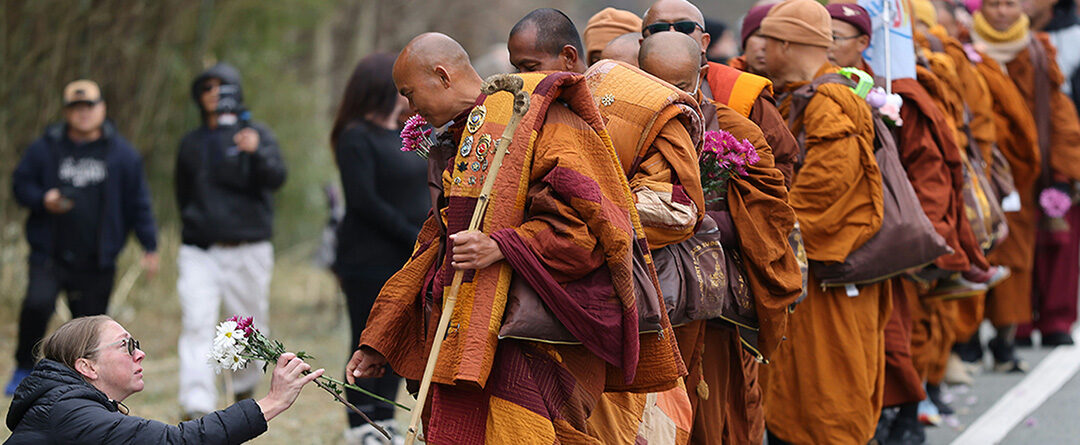
Nearly two dozen Buddhist monks from the Huong Dao Vipassana Bhavana Center in Fort Worth, Texas, set out last October to walk 2,300 miles to Washington, D.C. They carried no signs and issued no demands. They walked through cities and small towns, along roadsides and into gathering crowds, to promote healing, unity, and compassion. Along the way, something remarkable happened. As described by the New York Times, the world paid attention.
In my work, I spend my days with college students of many different religious backgrounds and alongside an interreligious team of chaplains. Together, we accompany young adults as they navigate questions of meaning, belonging, and belief. When a colleague, a Buddhist monk, asked if we could host the Walk for Peace, I said yes. At the time, I did not fully know what it would become. What I encountered changed me.
I participated in an hour-long silent meditation with nearly 4,000 people inside a stadium. I walked alongside thousands moving quietly through the streets of Washington, D.C. I greeted more than 200 monks who arrived without fanfare and were simply present. We welcomed the monks with an interfaith ceremony. What made it possible was a small army of people, including law enforcement, volunteers, religious leaders, medical teams and many others, all quietly doing their part. That too was peace in action.
Through it all, I watched and learned. The monks do not show favoritism. They meet every person, volunteer, bystander, and official with the same attention and respect. But the deepest lesson was quieter. Peace begins within. To sit in the present moment. To keep walking the journey in front of you without fixating on what was or what might be. The monks were not passive or resigned, they just had a quiet kind of presence, and a willingness to keep going. They were simply present and moving.
I also watched the young adults I work with.
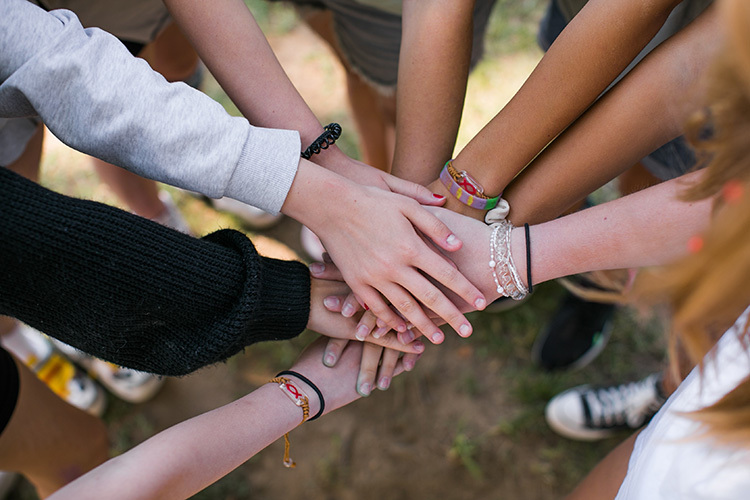 They showed up and welcomed strangers. They managed logistics, held space, and offered care without being asked. When the monks spoke, they listened. When the monks asked them to put away devices and sit in meditation, they did. I have been changed by what they carry. Our work across lines of age, tradition, and experience is less about passing a torch and more about recognizing the light that is already there.
In Christian worship, there is a moment called the Sharing of the Peace. It comes right after the Prayers of the Church, and it is easy to mistake it for a simple greeting. But it is a practice. When we have just asked God for justice, healing and mercy, we turn to one another and make peace. We do not wait to feel peaceful. We act. We extend our hands and our hearts and practice the very thing we are asking for.
Peace is not passive. It is something we do.
The monks embodied this. They did not wait for peace to arrive. They walked toward it, mile by mile, one encounter at a time.In the Gospel of Luke, two followers of Jesus walk the road to Emmaus after the crucifixion, disoriented and afraid. A stranger joins them and listens as they tell the story of what has happened. He keeps walking with them. At the end of the journey, when he breaks bread, they recognize him as the risen Christ.
This is how Jesus comes to them. Not with explanation, but in presence, in walking, in staying. And when Jesus appears to the disciples, his first words are simple. “Peace be with you.” Not as a formality. As a grounding truth in a moment of fear.
We live in our own kind of in-between time. Between what has been and what is not yet. A world that is beautiful and fractured at the same time. A world that asks much of us, often at a relentless pace. But the Walk for Peace reminded me of something essential.
Peace does not arrive fully formed. It is practiced. It is carried. It is built in small, steady ways, often in imperfect conditions.
I have seen it in monks walking from Texas to Washington, D.C. I have seen it in a dog named Aloka pressing forward on a healing leg. And I have seen it in people who are quietly and persistently walking toward a world they have not given up on.
Peace be with you and may today be your peaceful day.
Discussion Questions:
1. Where have you experienced peace in your own life, and what practices help you return to it when life feels overwhelming?
2. Think about a time you encountered someone from a different faith or background. What did you learn from that interaction, and how did it shape your understanding of peace?
3. The monks walked thousands of miles as a practice of peace. What is one small, steady step you can take this week to embody peace in your daily life?
Closing Prayer:
Loving God, you meet us in the present moment and walk with us even when we do not recognize you. Ground us in your peace when the world feels restless and uncertain. Give us the courage to practice peace in our words, our actions, and our relationships. Help us to carry your peace within us and to extend it outward to others. In Jesus’ name, Amen.
I loved this article and bless you and your coworkers for hosting the wonderful Peacemaking Monks! Thank you for sharing. We need more of this type of interactions and witnesses. May peace be with all who read about it.