
TW: If you or someone you love has been sexually assaulted or abused, you are not alone. Contact RAINN 24/7 to connect with a real, live person who’s trained to help. Call 800.656.HOPE or TEXT: HOPE to 64673
by Kara Haug
Just the other day when my child was hanging out with his friends, one of them tried to be funny and went to pull sweatpants off of one of the other boys. I looked at him and said, “You realize that is sexual harassment, right?” He looked at me shocked and said, “Really?”
I responded, “Yes, it is. You were trying to remove someone’s pants and there was no conversation around whether that was okay. That is violating their personal space and body and is considered hostile behavior, even if you mean it as a joke. Don’t do that stuff, because it’s not funny.” The other kid thanked me.
Many would think this is just “Boys will be boys” behavior, but “Boys will be boys” behavior only continues if we tolerate it and give it permission. It’s also calling out, as I have in classrooms before, when a boy shows vulnerability and then is instantly made fun of by some girls who tell him to, “be a man.” You can’t get a man who is emotionally available to you and your needs if you make fun of him when he shows sensitivity.
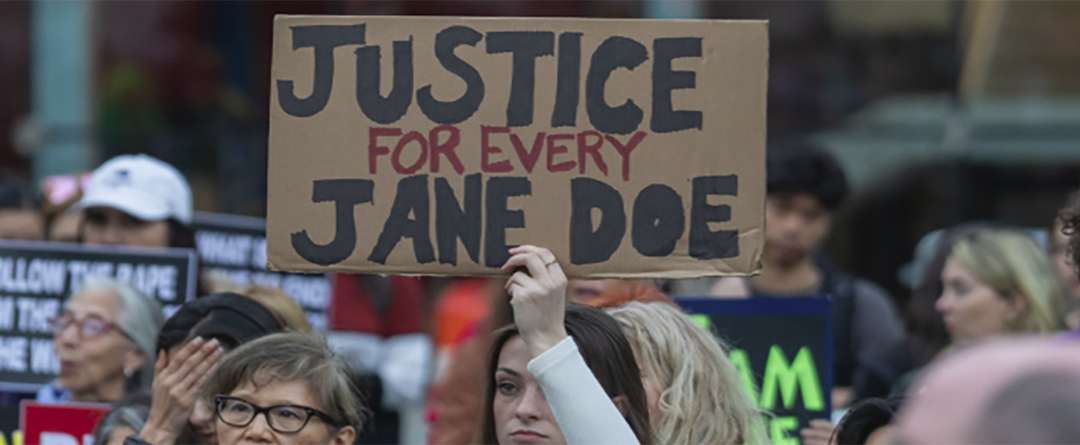
I think of these examples when I think about what has been transpiring these past few months around sexual assault and consent in today’s headlines.
I became a sexuality health educator because through my work in youth ministry and foster care, I saw firsthand how sexual abuse affects so many of our lives. When we don’t educate or give people the support they deserve, it also continues.
Whether we are discussing the Cornell Seven, Chanel Miller from Stanford, or Annabel Richter, who lost her life while attending the Fashion Institute of Technology or the names in the Epstein files who were abused and are still fighting for justice and the many more of us who also have a story–the tale remains the same. Those in power are protected and the ones who have been harmed carry the consequences from someone else’s behavior.
It is not okay, and quite frankly, I do believe it is destroying us. It is rather strange to live in our world where a lot of our nation fights for young people to not have comprehensive sexual health education. However, they will hand them screens where with one inquisitive thought typed into a search bar, it will provide them with a completely different kind of sex education.
We are also okay with the music produced and widely listen to where most of the lyrics pertain to sex. In 2009, there was a study done that found around 92% of the 174 songs that made it into the Billboard Top Ten contained sexual material. I’m sure that number has increased since then. We also all sit around a television during the Super Bowl with our families to watch commercials that sell hamburgers and other items by using sexual content. You get the point, and it doesn’t make any sense to me.
With AI and new technology, the landscape around sexual exploitation has become even worse. We are navigating things we haven’t had to think about before and it can feel overwhelming. So, what can we do? Below are five ways we can work to end Sexual Assault.
The first thing I advocate for is to deconstruct. To get started, we have to deconstruct the stories given to us around sexual health, gender roles, who deserves romantic love and what that looks like, beauty standards, and sexual response. When we do this, we will recognize two emotions that come to the surface repeatedly: anger and sadness, which lead to grief. To learn and understand sexuality more, it is an active process and it takes intention. It can feel like a lot, but it’s necessary if we want to end passing trauma down from generation to generation.
Next, we need fact-based, scientific, medically accurate, comprehensive sexual health education that is age-appropriate in schools, doctor offices, community centers, and places of worship. It is also important to offer parenting classes. Any person can become a parent and without proper sex education, it can happen when we aren’t ready. Regardless, the complexities of raising children and the emotional intelligence needed to do so need to be taught and discussed more than they are.
Beyond this, consent education needs to evolve from yes, no, and maybe to understanding the layers that accompany it. Consent is not just a cognitive undertaking, but a bodily one as well. Our ability to say the words yes, no, and maybe, are also tied to the need to belong, not wanting to disappoint, feeling like a burden, and or holding the unwanted emotions tied to rejection. Consent is for all humans in all relationships. It is not just for boys to receive an answer and girls to make the decision. It is a shared communal experience for all.
Most importantly, it’s time to lay to rest the roles we associate with a body part we are born with. Humans are a varied species and to assign attributes for them to live by based on a body part in between their legs that says what they can and cannot do, simply doesn’t make sense. From my experience in the work I do, this is the most damaging thing we continue to practice. It’s also not fair to any human. To put a theological bent on it, that’s why I like that we were created in a garden. A garden is filled with a variety of living things that all look and act differently. We are a part of that ecosystem. For instance, the fact we stop hugging our boys at a certain age and tell them not to cry is harmful. The fact that we tell girls to sit still and be quiet and not feel anger is also harmful. We need to stop this, and I am so grateful that the younger generation understands this more and more.
It also means calling things out when they happen. Like the example of my son and his friends, when we see something, we must say something. To change the ending to the tale we have been experiencing time after time around assault is to change the system and to hold one another accountable to the behaviors we do that cause harm. It also means that we need to get curious, offer one another more support and care, teach empathy, hold space for emotions that feel hard like sadness and anger, and teach more about coping skills that are healthy. Clearly more is at play here, and it feels lousy that we are still operating from a place where we are teaching females how to protect themselves, while not teaching males that sexual assault is not okay. This is why I help families navigate conversations around sexuality together and at young ages. This tale can change. I know it can. I have seen how it can. We just need to make it a priority and accessible. This is what we need to advocate for together.
Discussion questions:
1. How do you believe the church can talk to young people to offer support and care around their sexuality and to help change the narrative around sexual assault?
2. What do you believe is the main system that needs change to help rid of sexual assault?
3. How can we as a society help advocate for better sexual health education and a better understanding around the definitions of sexual assault and harassment?
Dear Lord, Thank you for giving us bodies in which we can experience your wonderful creations. We ask that you guide us in learning how to celebrate them, honor them, and care for others around them. Thank you for giving us the means to experience pleasure. May we advocate for all people to experience pleasure where they can be authentic to themselves and to know how to love and respect their neighbors. We often fall short and we ask you to help guide us in learning and knowing how to do better. In your name we pray, Amen.